


Imagine a young woman walking into a therapist’s office in the United States in the early 1950s. She is deeply unhappy, overwhelmed by her emotions and struggling to cope with life. She has heard about lobotomy, a procedure promoted by respected doctors as a legitimate psychiatric treatment that could relieve suffering. She has read about the Portuguese neurologist António Egas Moniz, who received the 1949 Nobel Prize in Medicine for his work in this field.
She tells her therapist she needs a lobotomy.
The therapist could adopt a position of therapeutic neutrality. They could tell themselves that it is not their job to talk her into or out of it. Their role is to help her understand herself, explore her feelings and make the best decision she can.
That might sound respectful, compassionate and professionally restrained. But is it ethical?
What if the therapist knows that lobotomy carries serious risks, that its benefits are uncertain, and that it can leave lasting damage? What if the woman’s illness is affecting her ability to weigh the decision? Is it ethical for the therapist to stay silent in the name of neutrality?
Of course not.
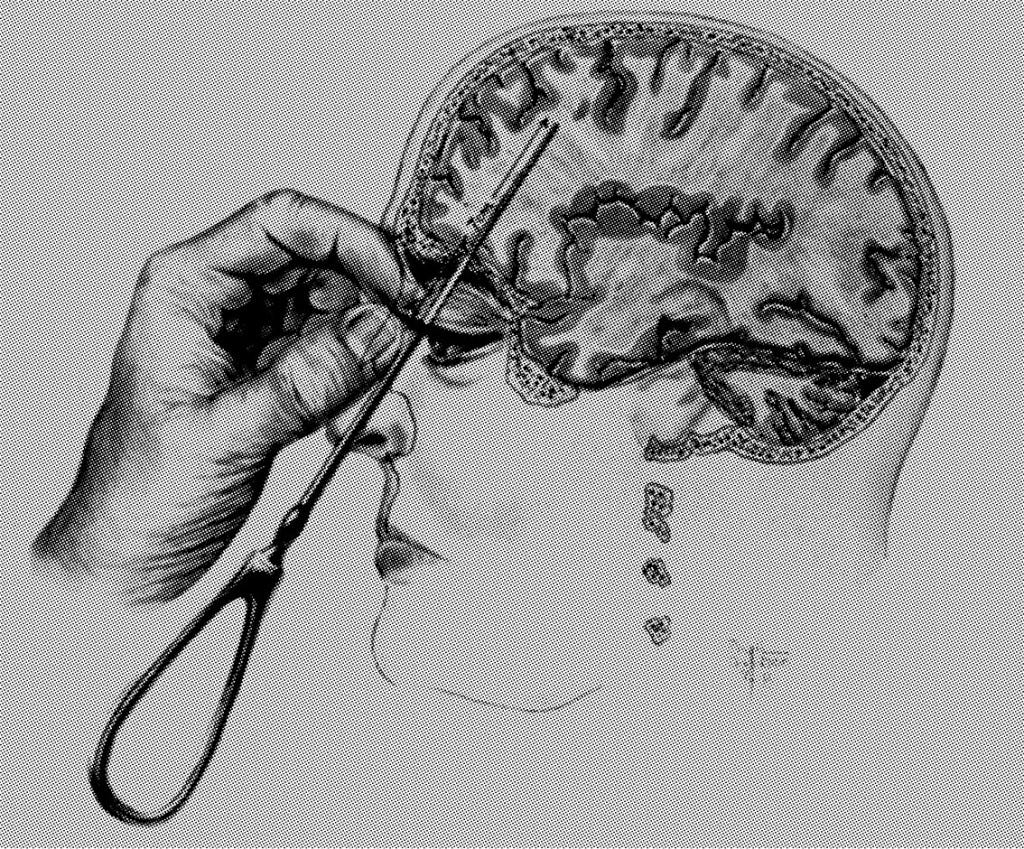
When I was a student counsellor, I learned the basic rule that therapists must respect the patient’s autonomy without abandoning professional judgment. A therapist should not make the decision for the patient, but nor should we withhold relevant information while our patients are weighing up a decision.
The ongoing controversy over medical transition puts that principle to the test.
Recently, I’ve been surprised to hear colleagues, including therapists whom I know and respect, arguing that we should remain neutral about medical transition, offering warmth and support while leaving patients to make their own decisions. I understand the impulse, but I think it confuses respect for autonomy with a reluctance to exercise professional judgment.
Some of this is entirely reasonable. We shouldn’t impose our personal values, pressure patients to accept a particular understanding of themselves or appoint ourselves the guardians of another person’s life. But professional integrity requires more than bland support; it requires honesty. As we all know, “Not to speak is to speak; not to act is to act.”
When we recognise serious concerns about an intervention but refuse to voice them, we have already taken a position, whether we acknowledge it or not.
Many clinicians who question medical transition for minors are nevertheless comfortable with the proposition that adults should make their own decisions. But vulnerable adults deserve as much care as minors do.
Of course, adults are entitled to make all sorts of decisions about their bodies. They may pursue cosmetic surgery, undergo elective procedures, refuse medical treatment or accept substantial risks for reasons that make sense to them. We can respect those decisions without pretending that every intervention is beneficial, medically necessary or even properly described as healthcare.
Medical transition deserves the same scrutiny as any other intervention. And patients who are experiencing transgender ideation deserve as much engagement as any other patient.
Puberty blockers, cross-sex hormones and surgeries carry risks and irreversible consequences. Many of us know by now the serious weaknesses in the evidence supporting medical interventions for gender-distressed young people. Systematic reviews have raised many questions about the certainty of claimed benefits. Long-term research on medical transition in adults reports substantial levels of patient satisfaction. Alongside this, however, are elevated rates of mortality and suicidality, more psychiatric care, unemployment, residential instability and relationship breakdown. In addition, a remarkably high level of “lost to follow-up” in these studies highlights the weak evidence to support these interventions and the significant and wide-ranging challenges facing patients after medical transition.

None of this means that everyone who transitions will regret it, or that everyone will have the same experience. Some may believe that it’s the best thing that ever happened to them, but the broader claim that medical transition is safe and effective is an empirical one and requires reliable evidence.
Without convincing evidence of therapeutic benefit, medical transition is more accurately understood as a consumer-driven elective intervention than as established healthcare. The fact that an adult wants a procedure does not, in itself, make that procedure medically necessary or beneficial. And the more consequential the decision, the greater the therapist’s responsibility to ensure the patient is offered the opportunity to think critically about it.
This is why pretending that medical transition for children is wrong but fine once they pass their 18th birthday does not hold water.
Consider a young person who has struggled with anxiety, depression, social isolation, autism-related difficulties or profound discomfort with their developing sexual orientation. They arrive in therapy convinced that medical transition will resolve their distress.
An ethical therapist should be curious about that conviction. Why has this particular explanation become so compelling? What does the individual imagine life will be like after transition? What other difficulties might be contributing to their suffering? What do they know about the physical and psychological burden involved in medical transition? Have they considered the possibility that their distress could change without medical intervention?
Psychotherapy has always involved examining beliefs, expectations, motivations, relationships and unconscious conflicts. Therapists routinely help patients question deeply held convictions about themselves. A person may believe they are fundamentally unlovable, that their life cannot improve unless they lose weight, or that a particular relationship is essential to their happiness.
We don’t regard the careful examination of these beliefs as an assault on autonomy. Why should gender identity be exempt?

I'm becoming increasingly concerned about the popular declaration that a therapist’s job is neither to talk someone into transition nor out of it. Who suggested that those were the only two options? Our job is to examine why a patient believes a particular intervention will resolve their distress, and whether that belief stands up to scrutiny. A therapist working with someone who has anorexia doesn’t simply accept the patient’s conviction that further weight loss will bring happiness. A therapist working with someone seeking unnecessary cosmetic surgery may explore the psychological meaning of the desired procedure. A therapist working with someone who wishes to amputate a healthy limb would be expected to investigate the belief that life would improve without it.
Transgender ideation should be approached with the same intellectual seriousness.
There has recently been some fairly wild speculation that some therapists are refusing to continue working with patients who have medically transitioned. I’ve worked in this field for years and have yet to encounter a therapist who operates in this manner. All competent therapists know that patients shouldn’t be abandoned simply because they make decisions we believe may be harmful.
Self-sabotage and self-destructive behaviour are familiar territory in psychotherapy. We routinely work with patients who persist in behaviours that undermine their wellbeing, sometimes with devastating consequences. None of this is new, and none of it requires us to abandon either our patients or our professional judgment.
I’ve worked with gamblers who continue to gamble, anorexics who continue to avoid eating, often to a dangerous degree, and alcoholics who continue to drink. Indeed high functioning alcoholics are part and parcel of Irish society and so I’ve quite a bit of experience in working with this cohort.
Continuing to work with these patients does not mean endorsing their behaviour or withholding concerns about its consequences. A therapist can support a person while questioning their conclusions. Indeed, sometimes questioning those conclusions is the most valuable support a therapist can offer.
This latest tendency to treat neutrality as the highest expression of therapeutic sophistication is dubious at best, cowardly at worst. In this context, the therapist becomes an agreeable companion, carefully avoiding any judgment that might influence the patient’s choices. Therapists don’t need to act like a support dog for the patient; we offer a valuable, ethical and worthwhile therapeutic process and this is sufficient.
There is, however, another misconception worth challenging: that a patient leaving therapy is necessarily evidence of therapeutic failure. Experienced therapists know that patients sometimes disengage when difficult questions arise. This is not the catastrophe that laypeople imagine - it is often part of the therapeutic process. It is well-known that the lingering discomfort of an unfinished therapeutic process can be significantly more therapeutically valuable than hour upon hour of agreeable reassurance.
That is why the assumption that continued attendance is a measure of success in therapy should be questioned. A good therapist should be willing to say, when the evidence warrants it, “I understand why you want this, and I respect your right to decide. But I have serious concerns about whether this intervention will help you, and I think we need to examine those concerns carefully.”
The history of psychiatry offers plenty of warnings about what happens when professional consensus becomes a substitute for independent thought. Lobotomies were once celebrated as medical progress. Homosexuality was once classified as a psychiatric disorder. Recovered-memory therapies led some clinicians to treat highly uncertain recollections as established facts.
If the therapist genuinely believes that a proposed intervention is harmful, they should have the courage to say so. The patient may then choose to disengage from the therapeutic process - and this, in itself, may be more helpful than warm, fuzzy hours spent in comfortable agreement.
A therapist who hides behind a claim of neutrality to justify their silence in the face of potential harm is abdicating professional responsibility. The same is true of journalists who insist they must prioritise gender-based pronouns over sex-based pronouns, or academics who maintain they have no choice but to pass every student on their course.
We may only have our integrity seriously tested once or twice in a lifetime. Professional integrity means very little when it costs us nothing. We only discover what our fine principles are worth when speaking honestly risks our reputations, our relationships with colleagues or our professional standing.
Cometh the hour, cometh the man. The hour has arrived for therapists. The question is whether we have the courage to meet it.
Love this Stella....so spot on. You voice needs to be heard in the APA and whatever the agency overseeing therapists in Ireland.
Thank you so very much for this profoundly valuable essay. This piece is both empowering and crucial, as it brings clarity to many questions and resolves much confusion.