

He Helped Ban Conversion Therapy. Now He Regrets It.
Peter Gajdics spent decades campaigning to outlaw conversion therapy. In the latest episode of Beyond Gender, he explains why he now regrets it.

Watch the conversation between myself, Peter Gajdics and Mia Hughes here:
Journalist and author Peter Gajdics played a leading role in Canada’s campaign to ban conversion therapy. He helped secure the first municipal ban in Vancouver before joining the national campaign that culminated in Canada’s conversion therapy ban in 2022. Yet today Peter believes that the law he fought so hard to introduce has become something very different from what he intended.
Like many gay activists of his generation, Peter assumed banning conversion therapy meant ending all attempts to alter a person’s sexuality or gender expression. Having survived six years of abusive psychiatric treatment himself, he believed nobody should ever again be subjected to therapies designed to change who they were. Whether someone was gay, lesbian or transgender made little difference to him. Psychiatrists needed to stop trying to medically or psychologically reshape people.
Looking back, Peter says he first became uneasy when the “T” was added alongside lesbian and gay rights during the mid-2000s. Even back then, in Peter’s view sexual orientation and gender identity involved different developmental processes, but he assumed they could still be protected under the same legislation. None of this really mattered to him; his overall he wanted to make sure that conversion therapy was banned so as to protect vulnerable people from coercive treatment.
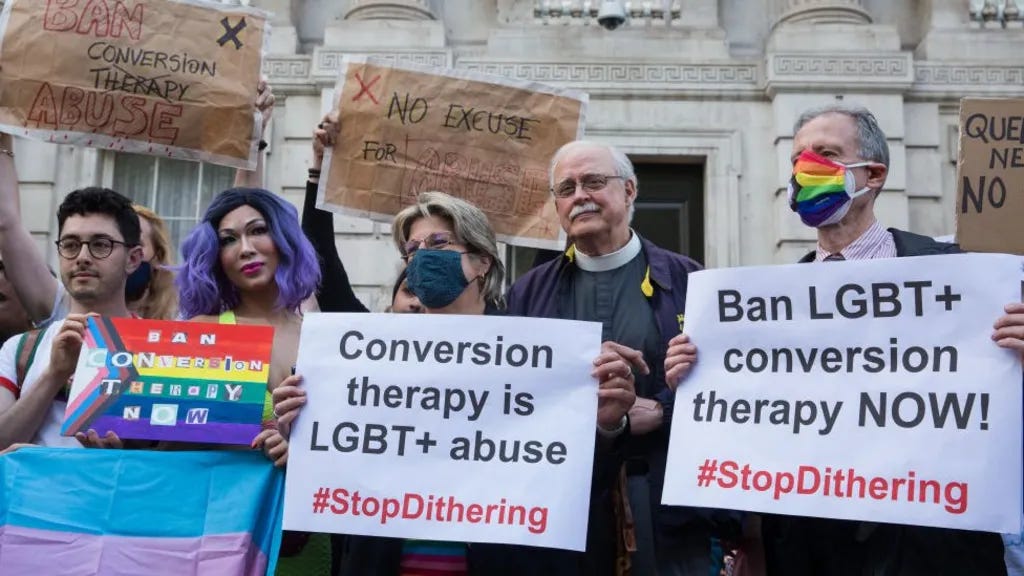
Everything changed in 2020. Like many people, Peter suddenly became aware of the explosion in the numbers seeking medcial transition. He came to understand what “gender-affirming care” (GAC) actually meant. Until then, he had assumed GAC simply meant accepting that gay, lesbian and transgender adults existed. He had no idea it involved puberty blockers, cross-sex hormones, surgery and, crucially, children. Nor did he realise that many of the safeguards and gatekeeping procedures he had presumed would protect vulnerable people were non-existent within the gender-affirming model. Slowly and painfully, Peter came to believe that the very conversion therapy bans he had worked so hard to introduce were being used to protect a new form of conversion therapy - chemical conversion therapy where gay and lesbians young people attempted to ‘trans the gay away’ as they didn’t want to be lesbian or gay.
Looking back, Peter sees clear similarities between the distressed young people now presenting to gender clinics and the confused, traumatised young man he had once been. Raised in Canada, he came out as gay in the late 1980s after years of confusion following childhood sexual abuse. The object of his sexual attraction was also the sex of his abuser, and this made it more difficult for him to disentangle desire from trauma. His family rejected him when he first came out. He left home, and, overwhelmed by depression, anxiety, self-harm, disordered eating and suicidal thoughts, he turned to a psychiatrist with one simple hope: ‘Help me!’”
At that crucial moment, when he was at his most vulnerable, Peter had the tragic misfortune to meet an abusive psychiatrist who broke every ethical standard there is. What followed was six years of abuse and cruelty.
Within a year, Peter’s psychiatrist insisted that he move into a house with five or six other patients. If he refused, his treatment would end. Terrified that no one else would help him, Peter agreed. And this is how Peter innocently entered a therapeutic cult that would horrify even the most jaded among us.
From the outside it looked like an ordinary suburban home. Inside, it revolved entirely around the psychiatrist. The patients lived together, attended therapy together and gradually became isolated from the outside world. They cooked for the psychiatrist, cleaned his houses, looked after his pets and hosted “intensives”, where other patients would move into the house for weeks at a time. For the next five years, Peter lived in the house with other patients under the psychiatrist’s control.
The centrepiece of the treatment was primal scream therapy, one of the more extreme psychotherapies to emerge from the 1970s. The patients were encouraged to regress to an infant state, relive childhood trauma, scream, cry and beat punching bags with baseball bats in an attempt to release buried rage. There was even a padded “primal scream room” in the basement of the house where these sessions took place.
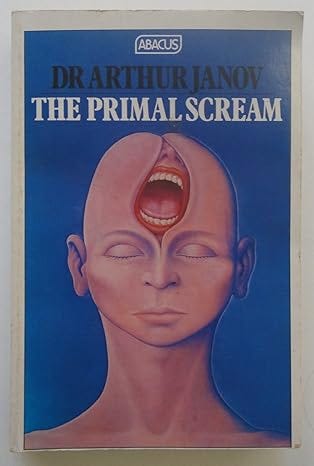
At first, Peter was told that primal scream therapy would help him recover from childhood sexual abuse. Before long, however, the goal changed. His psychiatrist announced that trauma had caused his homosexuality and that, with enough therapy, medication and emotional catharsis, Peter could be returned to his “innate heterosexuality”. According to his psychiatrist:
“Trauma had caused my homosexuality, or the idea that I thought I was gay, and so with enough primal, with enough medication, with enough whatever he needed to do, I would, I could revert to my base heterosexuality.”
When Peter objected, he was given an ultimatum – do as you are told or leave. His psychiatrist continued to increase the dosage of his medication. He was prescribed a sedative, four antidepressants simultaneously, weekly ketamine injections and eventually an antipsychotic after he overdosed. The psychiatirst attempted to suppress Peter’s libido with medication. One antidepressant, Elavil, reached 600 milligrams a day; more than double what Peter later discovered was regarded as the maximum dose for institutionalised psychiatric patients. Peter remained attracted to men.
The treatments became increasingly bizarre and abusive. As part of what was called “reparenting”, the psychiatrist cuddled Peter during ketamine sessions and even hired a woman to act as a surrogate mother. When this too failed to change his sexual orientation, the psychiatrist introduced aversion therapy, instructing Peter to bottle his own faeces and smell it whenever he felt attracted to another man. The psychiatrist also threatened to apply electrodes to Peter’s genitals. He never carried out the threat, but Peter says by then he was so heavily medicated and traumatised that the threat was enough to petrify him. After six years the house finally collapsed.
“So how did it end after six years? The house closed. We spiraled into like this primal state of of hysteria in the house. I mean, it was something out of Lord of the Flies, truly. And he said the house would need to end, and so we all went our own ways.”
Away from the psychiatrist, the drug doses were gradually reduced and Peter says it felt as though someone was slowly switching his brain back on. Only then did he begin to grasp what had happened to him. Within two years he had filed complaints with the medical regulator and sued the psychiatrist for malpractice. Neither process brought him any real sense of justice. The doctor denied wrongdoing, continued practising and the lawsuit was settled out of court.
“Within two years, I filed a complaint to the College of Physicians and Surgeons… So I filed a complaint letter to the one that oversaw this doctor, psychiatrists, that I was told would last like three weeks. It lasted two years.
The investigation, and then ultimately an ethics committee hearing where I went … and the doctor had his lawyer, and then I sued him for medical medical malpractice, and and the medical malpractice suit was primarily for, you know, unethical treatment of my sexuality, all the drugs, all the ketamine, everything. But you know, there was a lot more going on in that world, right? There was the whole cultic environment. We lived in this house. We were isolated. We ended up doing his chores, and cooking for him, and cleaning his houses, and taking care of his pets.
Truly it was like a cult environment. It really was. So the lawsuit was all of this. The lawsuit and the ethics complaint were ultimately very unsatisfying. He continued to practice without much of a reprimand.”
Peter later documented his experience in his memoir, The Inheritance of Shame, which chronicles both the abuse he endured and the long process of rebuilding his life. This horrible experience in the 1990s left Peter with a lasting conviction that vulnerable people can be drawn into systems that appear therapeutic but become closed worlds, governed by their own internal logic. Decades later, when he began reading about gender medicine, he recognised many of the same patterns. That recognition would eventually lead him to conclude that gender-affirming care had become, in his words, “the new euphemism for conversion therapy.”
“I went to live on my own … and the dosages of my medications were being lowered, and my independent thinking slowly returned. Literally, it was like slowly turning on the switch to my brain, and it wasn’t until I started thinking clearly that I understood I had not been thinking clearly for years. These drugs impaired the ability to think clearly. There was an internal logic to my therapy…You know, craziness makes sense to a crazy person, and and you know not to make light of it. You know an ideology, a self-referential ideology, will always make sense to the person in that loop, right? These are the things I recognized years later in the gender world. All of these things.”
When Peter began reading about the sharp rise in young people identifying as transgender after 2020, he found himself recognising his own childhood experiences. As a child, Peter had been what today would almost certainly be described as gender non-conforming. He was a sensitive little boy who preferred dolls, cooking with his mother and playing with girls. He disliked rough-and-tumble games and felt far more comfortable in what were then considered feminine interests. After being sexually abused at the age of six or seven, those feelings intensified.
At thirteen, when everyone else was out of the house, he secretly borrowed his sister’s bra and makeup, locked himself in the bathroom and dressed as a girl. He remembers believing that perhaps he was meant to be female. He was attracted to boys, but homosexuality was barely discussed in Canada at the time, having only recently been removed from the psychiatric manuals and decriminalised. To his adolescent mind, it seemed easier to imagine that he was a girl who liked boys than a boy who was gay. It happened only once, but the feelings behind it remained.
Looking back, Peter believes he would almost certainly have been identified as transgender had he been growing up today. He believes he would have been subjected to chemical conversion therapy and been placed on a medical pathway towards transition.
The more Peter learned about adolescents presenting to gender clinics, the more similarities he recognised. Trauma, body hatred, self-harm, eating disorders, same-sex attraction, shame and a profound sense of not belonging in one’s own body all felt deeply familiar.
That is why he now argues that gender-affirming care has become, in many cases, the modern equivalent of conversion therapy. The underlying assumption is remarkably similar; a distressed, gender-nonconforming young person cannot simply be supported to grow into themselves. Instead, their distress is interpreted literally and treated medically.
Peter devoted years of his life towards banning conversion therapy. The problem was that when conversion therapy legislation began appearing across North America, the distinction between sexual orientation and gender identity had largely disappeared. And one cancelled out the other.
Peter traces the turning point to 2015 of this conflation to the media response to the suicide of Leelah Alcorn. This tragic case received enormous international attention and became a defining moment in the campaign against conversion therapy. President Obama publicly called for an end to conversion therapy in response, and, in Peter’s view, that was the moment sexual orientation and gender identity became firmly linked in the public imagination.
A moment that crystallised everything for Peter came in December 2021, when Canada’s national conversion therapy ban passed Parliament. It should have been a moment of triumph. Instead, Peter watched the vote alone in his apartment during the Covid lockdowns and felt nothing. As he writes in his recent Spiked essay, there was “no excitement, no sense of victory.”
By then he had already realised that the campaign he had devoted decades of his life to had been transformed into something he no longer recognised. One episode particularly disturbed him. After the legislation came into force, the Canadian academic Florence Ashley published a book on “trans conversion practices”. Peter discovered that his own story had been included. Peter believes readers would naturally assume he was a transgender person subjected to trans conversion therapy, despite the fact that he is a gay man whose experience had been entirely different. This proved to Peter how thoroughly the history of gay conversion therapy had been absorbed into a new political narrative.
Peter came to the bitter conclusion that the law he had spent years campaigning for had come to protect the very kind of treatment he had devoted his life to opposing.
As Peter became more vocal about this point, he found himself increasingly isolated. Colleagues who had once worked alongside him now refused to engage. Publishers and activists who had spent years campaigning against conversion therapy accused him of transphobia. The movement he had helped to build no longer seemed interested in protecting gay people. Its focus had shifted almost entirely towards protecting access to medical transition.
Few people have experienced conversion therapy as brutally as Peter did. Fewer still have spent decades campaigning to outlaw it, only to conclude that the movement they helped create had taken a direction they never intended. His account is a reminder that good intentions are not enough. We have to keep asking whether the treatments we offer vulnerable young people are helping them understand themselves, or changing who they are before they have had the chance to do so.
Watch our conversation here:
Wow! What a thoughtful and tragic story. I’m happy to know he is on a better path and that he’s outspoken about rejecting his former beliefs.
I question the term “conversion therapy”. Does conversion therapy mean asking a child why they think they are the opposite sex or some made-up gender compound word? From what I’ve seen, the TQs refer to anything that questions their belief system as conversion therapy. Thus far, I haven’t found anything to counter this so any clarity would be appreciated!