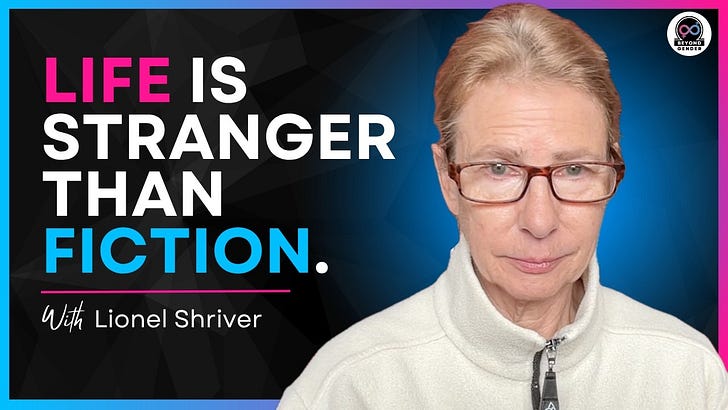
The mood has changed. The slogans have faded, and the certainties of a decade ago have crumbled. Against this backdrop, my co-host Mia Hughes and I recently sat down with Dr Louise Irvine of the Clinical Advisory Network on Sex and Gender (CAN-SG) to discuss their forthcoming conference, Rethinking Youth Gender Medicine, taking place on 5-6 July. If the programme is anything to go by, the easy arguments are over. The harder and more interesting questions are only beginning.
At a time when many people assume the debate has been settled, this conference, organised by CAN-SG in partnership with the Society for Evidence-Based Gender Medicine (SEGM), explores the practicalities.
How did we get here? What have we learned? What mistakes are we in danger of repeating? And what happens next? All are up for discussion, and the programme itself reflects a remarkable breadth of analysis.
Professor Michael Biggs will examine one of the most consequential developments of the past three decades in his talk, How the Availability of Puberty Suppression Transformed the Social, Cultural, and Medical Landscape. Puberty blockers are often discussed as though they simply appeared as a neutral medical intervention. Biggs places them within a wider historical context, asking how their existence altered expectations, identities, and clinical practice itself.
Dr Hannah Ryan’s session, Hormonal Interventions in Gender Medicine - What Are the Harms?, addresses a question that for years was treated as almost taboo. Medicine advances by honestly confronting risks, not by pretending they do not exist.
Stephanie Davies-Arai of Transgender Trend tackles another issue that has moved from the margins into the mainstream. Her presentation, Social Transition - What’s the Harm?, explores an area where the evidence base remains strikingly thin despite years of confident assertions.
Maeve Halligan examines the wider social environment surrounding girls and young women. Increasing numbers of clinicians and researchers are asking whether broader cultural pressures have shaped the rise in female adolescent distress and identity-related difficulties. Her talk promises to address questions many parents have been asking for years.
Michael Kerr’s presentation, Detransition Pathways - Going Back but Moving Forward, highlights an issue that barely existed in public discussion a decade ago. Detransitioners have forced medicine to confront realities it previously preferred to ignore.
And I will be speaking about how we can support those harmed by medical transition and trans ideology. Beyond Trans - What Kind of Support Do Detransitioners Need? draws on years of experience facilitating groups involving hundreds of detransitioners and thousands of parents. Detransition is often portrayed as a medical issue. In practice, it is equally a psychological, relational and existential one.
Over the past few years, a new position has emerged. In our conversation, I describe it as “gender-critical lite”.
Unlike activists who insisted that every distressed child was simply a “trans child”, this newer approach accepts that mistakes were made and recognises the weakness of the evidence base. But it often stops short of questioning the underlying assumptions.
Its logic stems from what I call “tiny numbers theory”.
The argument runs like this. Most young people presenting with gender distress are not suitable candidates for medical transition. However, a very small number are thought to represent genuine, persistent cases for whom medical interventions may function as a form of long-term symptom management. It is important to note that language about “true trans” individuals is absent. Doctors do not speak in those terms. Instead, discussions increasingly revolve around concepts such as “palliative care for chronic conditions”. The emphasis is on harm reduction and minimising suffering.
Methadone is certainly preferable to heroin. Yet harm reduction approaches come with their own dilemmas. If puberty blockers and cross-sex hormones are presented as symptom management for a small number of chronic patients, we are faced with an uncomfortable question. Does the availability of these interventions itself create new categories, new expectations and ultimately new patients? And does this itself create more problems than it resolves?
This is one of the most fascinating themes running through the conference. Professor Michael Biggs’ talk asks how the availability of puberty suppression transformed the social, cultural and medical landscape. History should make us cautious.
In the 1990s, puberty blockers came to be presented as an intervention for tiny numbers of severely distressed adolescents. The small number of clinicians working in the field believed they could identify a narrow subset of children who might benefit. The intervention was introduced cautiously. Numbers were tiny. Confidence was high.
Few people imagined what would follow.
Within two decades, referrals to gender identity clinics had exploded, safeguards weakened and ideological assumptions flourished.

In this context, recreating the same conceptual framework under new language feels foolhardy. Once an intervention exists, the treatment itself becomes alluring to people who are in mental pain. Most of us believe ourselves to be exceptional cases and naturally seek to persuade doctors that our suffering warrants special consideration.
For a highly vulnerable group that often ruminate over whether they are “trans enough”, a framework that reserves medical intervention for only the most severe cases creates powerful incentives to identify with that category.
Clinicians treating eating disorders are already familiar with this problem. It is well known that communicating to an anorexic patient that she is not underweight enough to warrant hospitalisation can have unintended consequences. Rather than feeling reassured, she will likely conclude that she is still “too fat” and intensify the very behaviours that place her health at risk.
The presence of a treatment programme reserved for the extremely unwell is likely to encourage vulnerable people to demonstrate that they belong within that category. The category itself becomes more attractive. Exceptional cases become benchmarks against which vulnerable people judge themselves. In such circumstances, thresholds designed to limit access can end up encouraging patients to understand themselves through the lens of exceptionalism.
This is why the next stage of the debate matters so much.
During our conversation, Dr Irvine and I discussed why none of the clinicians working within the new regional gender services established after the closure of GIDS appear among the conference speakers. These services were intended to represent a fresh start. Yet many parents have contacted us to report that the regional clinics continue to offer identity-based treatment that gives a passing nod to psychology rather than a genuinely psychological approach.
Every indication suggests that groupthink remains deeply embedded within parts of the NHS and that organisational restructuring has done little to alter the underlying culture. Changing the sign on the door has not changed the approach. If anything, it has merely made everything more secretive. It turns out that publishing the Cass Review and reorganising services are not enough. Cultural change is far harder than administrative change.
The Cass Review represented an important corrective to years of activism masquerading as science. Yet Hilary Cass’s support for a puberty blocker trial illustrates the fundamental dangers embedded within the gender-critical lite approach. Once medicine accepts the principle that there exists a small group of exceptional patients for whom these interventions are justified, the old questions inevitably return.
And these are not issues that concern Britain alone. Different countries are wrestling with the same dilemmas in different ways. In Sweden, despite the great fanfare when restrictions were introduced in 2021, more puberty blockers are prescribed today than before those restrictions were put in place. This is precisely why Genspect is focused on raising public awareness; we recognise that institutional cultures and patient expectations often prove far more durable than policy changes.
We need to pay close attention to the different responses emerging around the world because they offer a glimpse into the next chapter of the trans debate. Countries will learn from one another’s successes, and they will learn from one another’s mistakes.
Book tickets to the conference here: https://can-sg.org/
Watch our conversation here: