


Watch here:
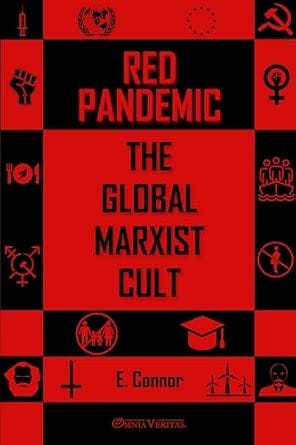
When I invited Emmet Connor onto the podcast, I knew the conversation would provoke strong reactions, with some agreeing and others virulently disagreeing. I’m not sure where I land on this, but I do know the topic deserves some discussion. Emmet argues that many of the social changes that have transformed Western society over recent decades are connected by a single ideological thread. His new book, Red Pandemic, argues that Marxism did not disappear with the collapse of the Soviet Union. Instead, he believes it evolved, adapted and re-emerged in new forms that now shape debates about identity, education, free speech, climate activism and gender.
One of the reasons I wanted this conversation was because people often ask me a perfectly reasonable question. Why did the trans phenomenon happen? Was it a perfect storm of events or was it part of a larger plan? Many believe that we should only focus on the medical field and scrutinise how the clinicians lost their way. According to the isolationists, this is simply a debate about medicine, psychology and children’s welfare and everything else is a distraction. Emmet’s answer is that the trans phenomenon cannot be understood in isolation. He argues that the same patterns appear repeatedly across Western countries. Similar language, similar campaigns, similar institutional responses and similar ideas emerge at roughly the same time in places with very different political cultures. His explanation is that these are not disconnected developments but expressions of a much larger ideological movement.
That does not mean he believes a handful of people are sitting around a table secretly co-ordinating world events. Events such as Covid were far more chaotic than coordinated. Governments often looked confused rather than competent. Institutions frequently contradicted one another. Much of what happens in the world today appear to be incompetence, panic and groupthink rather than the execution of a grand master plan.
Emmet argues, however, that ideologies can eventually become self-sustaining. They no longer require central direction because enough people sincerely believe the underlying assumptions. An idea can spread through universities, professional bodies, charities, corporations, schools and governments and then ordinary people begin reproducing it without consciously recognising where their world view originated. Whether that explanation convinces you or not, it is a more sophisticated argument than simply claiming that everything is controlled by shadowy elites.
I asked Emmet whether he was left-wing or right-wing. He responded that the political left have been contaminated by Marxist ideology and he saw himself as mostly anti-globalist. He’s against open borders policies, he believes that patriotism is an appropriate response from a citizen of any country.
We also discuss the now almost ubiquitous reflection about how ideas that once seemed completely unquestionable have become open to dispute. Only a generation ago, most people would never have imagined public arguments over whether biological sex exists. Today those debates are common. Emmet sees this as part of a broader intellectual movement influenced by postmodernism, where objective truth gradually gives way to subjective experience. Again, many readers will disagree with that analysis. Others will agree entirely.
My purpose in hosting conversations like this is not to tell people what conclusions they should reach. It is to explore ideas that are already shaping public life. That is particularly important in the trans debate as we have already noticed the detrimental impact of echo chambers. People often assume that clinicians working in this field should confine themselves to discussing diagnostic criteria, treatment pathways or research papers. Further scrutiny shows that focusing solely on diagnoses and treatment approaches misses much of the broader picture. Academia, journalism, feminism and a culture of extreme tolerance have all played significant roles in enabling this ongoing medical and institutional scandal.
Whether Emmet is right about Marxism, globalism, imperialism, nationalism or any other ism is ultimately something you will have to decide for yourself. His central claim is ambitious; he argues that Marxism has survived by repeatedly changing its appearance while retaining its underlying revolutionary character. Others would strongly dispute both his historical interpretation and his conclusions. Yet his ideas are thought-provoking and they generate further analysis, which is good enough for me.
Whatever your view, I suspect you’ll find yourself thinking long after the conversation has ended.
Watch the full interview and please let me know where you agree, where you disagree and, perhaps most importantly, which arguments you think deserve more examination.